About Burke Special Projects

This author has not yet filled in any details.
So far Burke Special Projects has created 8 blog entries.

Smart Construction Budgeting for Tenant Build-Outs

WHAT TENANTS SHOULD KNOW, AND HOW BSP MAKES IT EASIER


When planning a commercial build-out, one of the biggest concerns for tenants is their budget. How much will it really cost? What decisions impact the total? How can surprises be avoided?

At Burke Special Projects (BSP), we believe the most successful projects begin with early, careful construction budgeting. By working with tenants right from the start, we help turn uncertainty into clarity and ideas into workable plans.


How Construction Budgets Are Built

A construction budget is more than just a number—it’s a guide that helps tenants understand how their project will come together financially. Our estimators develop budgets using real project data and practical experience.

They evaluate several key factors, including:

  • The size and complexity of the space
  • The scope of work and level of customization
  • Existing building conditions and landlord requirements
  • Mechanical, electrical, and plumbing needs
  • Current labor and material costs in the market

Early budgets also include reasonable allowances for finishes and specialty features. This provides tenants with flexibility while keeping expectations realistic.

Industry resources such as the Associated General Contractors of America emphasize that early cost planning is one of the most important factors in keeping construction projects financially aligned.


The Power of Test Fit Floor Plans

One of the most effective tools in early construction budgeting is a test fit floor plan.

BSP works directly with business owners to develop test fit layouts that reflect how the space will actually be used. These preliminary plans help define:

  • Wall locations and space programming
  • General square footage for offices, open areas, and support spaces
  • Preliminary MEP locations
  • Functional flow and operational efficiency

With a test fit in place, BSP can develop accurate early-stage budgets long before final design documents are completed.

Test fits also help ensure layouts comply with safety and accessibility requirements commonly governed by building standards maintained by organizations like the International Code Council.


Why Early Budgeting Gives Tenants an Advantage

Early budgeting gives tenants control. Instead of reacting to costs late in the process, you can plan proactively and make informed decisions from the beginning.

The benefits include:

  • Clear understanding of expected investment
  • Alignment between business goals and design choices
  • Reduced redesign and change orders
  • Faster decision-making and smoother project delivery

Early budgeting helps ensure that the space you envision is the space you can confidently build.


How BSP Streamlines the Process

Burke Special Projects specializes in tenant-focused projects and understands the pressures business owners face when launching or expanding a business location.

Our collaborative approach allows us to:

  • Create base build-out budgets using test fit floor plans
  • Include allowances for upgrades or branding elements
  • Help tenants establish a realistic baseline budget before committing to full design

This process keeps projects efficient, transparent, and financially aligned from day one—saving time, money, and stress.


Budgeting Tips Every Tenant Should Know

  • Engage your construction partner early
  • Understand what the landlord provides versus tenant scope
  • Account for soft costs like design, permits, and furniture
  • Build contingency into your budget for unforeseen conditions
  • Choose a partner who understands tenant needs, not just construction


Ready to Build with Confidence?

Whether you are planning a new office, medical space, or specialty build-out, Burke Special Projects can help you start with clarity.

By developing test fit floor plans and realistic early budgets, we remove the uncertainty from construction and help business owners move forward with confidence.


Frequently Asked Questions About Construction Budgeting

Why is early construction budgeting important?

Early budgeting helps identify potential costs and constraints before design decisions are finalized. This reduces the risk of redesigns, delays, and unexpected expenses later in the project.

What is a test fit floor plan?

A test fit is a preliminary layout that shows how a business might occupy a space. It helps determine seating counts, room sizes, circulation paths, and infrastructure needs before detailed design begins.

What costs are included in a tenant build-out budget?

Budgets typically include construction labor, materials, mechanical and electrical systems, finishes, permits, and contractor coordination. Some budgets also account for allowances and contingency planning.

When should tenants involve a contractor?

Ideally before signing a lease. Early contractor involvement allows realistic cost estimates and space planning before financial commitments are finalized.

 

Tenant Improvements 101: Costs, Allowances, and Build-Outs Explained

Leasing a new commercial space is an exciting milestone—but for many business owners in Las Vegas, it can also feel overwhelming. Between negotiating a lease, understanding tenant improvement (TI) allowances, and figuring out how to turn an empty shell into a functional space, the process can quickly become complex.

This guide breaks down the basics of tenant improvements, what Las Vegas tenants should know before signing a lease, and why working with a design-build team is often the best way to open your space faster, stay within budget, and avoid unnecessary headaches.


What Are Tenant Improvements?

Tenant improvements (often called TIs) are the interior build-outs or modifications made to a leased commercial space so it meets your business’s operational needs and brand standards.

Common tenant improvements include:

  • Interior walls and layouts
  • Electrical, lighting, and data systems
  • HVAC modifications
  • Plumbing installations
  • Flooring, ceilings, and finishes
  • ADA compliance upgrades
  • Custom millwork or branded elements

Tenant improvements are common across many industries including retail, restaurants, medical offices, professional services, and hospitality spaces. Most projects must meet safety and accessibility requirements governed by building codes such as those maintained by the International Code Council.


How Tenant Improvements Work in Las Vegas

Tenant improvement projects in Las Vegas follow a process that typically includes design, permitting, construction, and final inspections before the business can open.

While every project is different, most tenant improvements involve the following steps:

  • Evaluating the existing space and infrastructure
  • Developing preliminary layouts or test-fit plans
  • Coordinating with local jurisdictions for permits
  • Completing construction and required inspections

Depending on the jurisdiction—such as Clark County or the City of Las Vegas—commercial projects may require plan review before permits are issued. Working with a contractor familiar with the local permitting process can significantly reduce delays and keep projects moving efficiently.


How Much Do Tenant Improvements Cost?

Tenant improvement costs can vary widely depending on the type of business and the condition of the space. Restaurants, medical offices, and hospitality projects typically require more infrastructure than basic office or retail build-outs.

Common factors that influence tenant improvement costs include:

  • The size of the space
  • Mechanical, electrical, and plumbing upgrades
  • Kitchen or specialty equipment requirements
  • Custom finishes or branded design elements
  • Local permitting and inspection requirements

Second-generation spaces—those previously built out for a similar use—often require less work than new shell spaces. Early planning and realistic budgeting are key to ensuring the project aligns with both the lease terms and the tenant improvement allowance.


Understanding TI Allowances in Las Vegas Leases

Many commercial leases include a tenant improvement allowance (TIA), which is money the landlord contributes toward the cost of building out the space.

While this sounds straightforward, TI allowances often come with important conditions.

Things tenants should consider include:

  • The allowance may only cover basic construction, not upgrades
  • Funds are typically reimbursed after construction is complete
  • Costs exceeding the allowance become the tenant’s responsibility
  • Unused allowance dollars may not roll over or be refundable

Understanding the structure of your TI allowance before signing the lease can help avoid budget surprises later. Commercial real estate resources such as tenant improvement allowance guidance explain how these incentives typically work within leases.


The Biggest Mistake New Tenants Make

One of the most common mistakes business owners make is treating design and construction as separate processes—hiring a designer first and then bidding the project to contractors later.

In fast-moving markets like Las Vegas, this approach can create delays, budget conflicts, and costly revisions.

Common problems include:

  • Designs that exceed the TI budget
  • Multiple change orders during construction
  • Longer timelines
  • Misalignment between designers and contractors
  • Permit or inspection delays


Why Design-Build Is Often the Best Option for Tenant Improvements

At Burke Special Projects, design and construction work together under one team, one contract, and one point of accountability. For business owners leasing space in Las Vegas, this approach provides several advantages.

1. Cost Control From Day One

Design decisions are shaped around the actual project budget and TI allowance, helping prevent costly surprises later.

2. Faster Timelines

Because design and construction phases can overlap, projects often move faster through permitting and procurement.

  • Faster permitting
  • Earlier material ordering
  • Shorter overall project schedules

3. Fewer Change Orders

Contractors involved early in the design process can identify potential conflicts before construction begins.

4. Single Point of Responsibility

Instead of coordinating multiple vendors, business owners work with one team responsible for design, budgeting, scheduling, and construction delivery.

5. Local Market Expertise

Local knowledge can save weeks—or even months—during construction. A Las Vegas design-build contractor understands:

  • Local permitting requirements
  • Clark County and city review processes
  • Local subcontractor networks
  • Market-specific construction costs


When Should You Bring in Burke Special Projects?

Ideally, before you sign the lease.

Early involvement allows the team to:

  • Review the space before committing
  • Provide realistic construction estimates
  • Help negotiate tenant improvement allowances
  • Identify potential design or infrastructure issues
  • Align the layout with operational needs

Early planning gives tenants leverage and clarity—rather than surprises during construction.


Final Thoughts

Tenant improvements do not have to be intimidating. For Las Vegas business owners leasing a new space, understanding the basics and choosing the right delivery method can make all the difference.

By partnering with a design-build team like Burke Special Projects, you gain cost certainty, faster timelines, and a smoother path from lease signing to opening day.

If you are preparing to lease a new commercial space, contact Burke Special Projects to start the conversation.


How to Choose a Design Team and Commercial Contractor in Las Vegas

For many business owners, construction is not something you do every day, but the impact of getting it right or wrong can last for years. The good news is that a little upfront clarity can save you time, money, and stress down the road.

Here is what to look for when choosing a commercial contractor or design partner—and why working with a local expert like Burke Special Projects makes a difference in the Las Vegas market.\


1. Compare Value

It is tempting to go with the lowest bid, especially when construction costs feel unpredictable. But in commercial construction, the cheapest option often becomes the most expensive once the project is underway.

A good contractor does not just give you a number. They help you understand the reasoning behind it and explain how scope, materials, scheduling, and coordination affect the final cost.

Instead, look for a contractor who:

  • Clearly explains what is included and what is not
  • Provides realistic timelines and budgets
  • Identifies potential challenges early
  • Helps you avoid costly change orders

Industry organizations such as the Associated General Contractors of America emphasize that project transparency and early planning are key factors in successful commercial construction outcomes.


2. Choose a Contractor Who Knows Las Vegas

Las Vegas commercial construction moves quickly—but only if your team understands the local process. Permitting, inspections, codes, and coordination with local agencies can slow a project down if your contractor is unfamiliar with the region.

Local experience is not a bonus. It is a necessity.

Working with a Las Vegas-based commercial contractor means:

  • Fewer permitting surprises
  • Faster inspections
  • Better coordination with local designers and vendors
  • Smoother project flow overall

Local permitting and safety requirements are based on building codes maintained by organizations like the International Code Council, which many jurisdictions adopt or adapt for their construction standards.


3. Make Sure Design and Construction Are Aligned

One of the most common issues in tenant improvements and renovations occurs when design and construction teams are not working together early in the process.

Beautiful plans that do not match the budget—or cannot be built efficiently—often lead to delays, redesigns, and frustration for business owners.

When designers and contractors collaborate early, projects stay on track and owners stay informed.

The best results come from teams that:

  • Collaborate early in the design phase
  • Offer constructability and budget reviews
  • Balance design intent with real-world construction needs

This collaborative approach is often associated with integrated project delivery methods such as design-build project delivery, which emphasizes coordination between designers and builders from the start.


4. Communication Should Feel Easy

If communication feels difficult at the beginning, it usually does not improve once construction starts. You should not have to chase your contractor for answers.

A reliable commercial contractor should:

  • Be responsive and easy to reach
  • Provide regular schedule and budget updates
  • Speak plainly without confusing jargon
  • Be honest when challenges arise

Strong communication practices are widely recognized as a critical factor in successful construction management and project delivery.


Why Business Owners Choose Burke Special Projects

At Burke Special Projects, we focus on what business owners actually care about: clarity, accountability, and results.

Built for Tenant Improvements and Interior Projects

We specialize in commercial tenant improvements, renovations, and interior build-outs where precision, coordination, and speed matter most—especially in occupied or revenue-generating spaces.

Las Vegas Expertise You Can Rely On

Our team understands the realities of building in Las Vegas. From navigating permits to keeping projects moving on tight schedules, we know how to minimize downtime and keep your business goals front and center.

Collaborative From the Start

We work closely with owners, architects, and designers early in the process to align scope, budget, and schedule before construction begins. That proactive approach helps eliminate surprises and keeps decision-making straightforward.

Transparent, Straightforward Communication

Clients work with Burke Special Projects because we are clear, responsive, and accountable. We believe successful projects start with trust—and trust comes from doing what we say we will do.


Choosing the Right Contractor Sets the Tone for Your Project

Choosing the right design team and commercial contractor does not have to be overwhelming. Focus on experience, communication, local knowledge, and collaboration rather than just price, and you will set your project up for success.

If you are planning a commercial renovation or tenant improvement in Las Vegas, Burke Special Projects is ready to help you move forward with confidence.


Frequently Asked Questions About Choosing a Commercial Contractor

How do I evaluate a commercial contractor?

Business owners should look at experience with similar projects, communication style, transparency in pricing, and the contractor’s ability to coordinate with designers and consultants early in the process.

Why is local construction experience important?

Local contractors understand permitting processes, inspection requirements, and regional construction practices. That knowledge can significantly reduce delays and unexpected issues during a project.

Should design and construction teams work together?

Yes. Projects where designers and builders collaborate early tend to experience fewer delays, clearer budgets, and more efficient construction sequencing.

What matters more than the lowest bid?

Value, transparency, and experience typically matter more than the lowest price. The right contractor helps prevent costly mistakes, change orders, and schedule disruptions.


Restaurant Pitch Decks: How to Get Investors Interested

Opening a restaurant is exciting. Pitching it to investors? That’s where things can get tricky. A great idea and solid experience aren’t always enough on their own. Investors want to clearly understand what you’re building, how it works, and whether it can realistically come to life. That’s why a strong restaurant pitch deck is such an important part of the process. In competitive markets like Las Vegas, investors are accustomed to seeing well-prepared concepts that demonstrate both creativity and feasibility. A clear restaurant pitch deck helps translate a restaurant idea into something investors can evaluate with confidence.


What a Restaurant Pitch Deck Really Does

A good pitch deck tells your story in a clear, simple way. It helps investors quickly understand:

  • Your restaurant concept and vibe
  • Who it’s designed for
  • What makes it different
  • How the guest experience works
  • Why the concept fits the market

Most investors review many opportunities before deciding where to place capital. A clean, well-organized presentation helps ensure your idea stands out and keeps the conversation moving forward.

Structured investor presentations are widely recognized as a key communication tool in early-stage funding. Resources such as Y Combinator’s pitch deck guidance highlight how clear storytelling and visual structure can improve investor engagement.


Why a Professional Pitch Deck Helps

When your pitch deck is done right, it:

  • Makes your concept easy to understand
  • Shows that you’re prepared and serious
  • Builds confidence in your ability to execute
  • Helps investors visualize the finished restaurant

Instead of simply describing the idea, you are showing how the restaurant will function in practice. Visual storytelling, operational clarity, and realistic planning can all contribute to stronger investor conversations.


How Burke Special Projects Supports Restaurant Concepts

At Burke Special Projects, we help restaurant owners turn ideas into investor-ready presentations. Our approach focuses on clarity, storytelling, and real-world feasibility rather than generic templates.

We help with:

  • Restaurant pitch deck creation
  • Concept positioning and storytelling
  • Layout-driven planning to support your narrative
  • Materials that help guide investor conversations

Our goal is to help your concept make sense on paper and feel believable in the real world.


Test Fit Plans That Strengthen Your Pitch

One of the biggest questions investors have is simple: Will this actually work in the space?

That’s where our test fit and feasibility planning comes in.

We can develop schematic-level test fit plans for specific locations to help outline:

  • Kitchen and back-of-house layouts
  • Seating counts and dining flow
  • Bar placement and service zones
  • Approximate space allocation
  • Early code-aware planning at a schematic level

These are not full construction drawings, but they demonstrate that a concept has been thoughtfully evaluated within a real space. Early planning also helps identify potential life-safety considerations governed by adopted building codes maintained by the International Code Council.

Including test fits in a pitch deck helps investors visualize the restaurant and feel more confident that the idea is grounded, not just aspirational.


Why This Works Especially Well in Las Vegas

Las Vegas is one of the most competitive restaurant markets in the United States. Investors here frequently evaluate multiple hospitality concepts and expect ideas to be clearly thought out from day one.

Between complex layouts, tight footprints, and strict code requirements, early feasibility planning can make a significant difference in whether a concept is viewed as realistic.

A pitch deck supported by schematic test fits helps demonstrate:

  • Operational flow
  • Guest experience within the space
  • Seating potential
  • Code and compliance considerations

Burke Special Projects is especially well suited to support Las Vegas restaurant concepts, whether on or off the Strip, in casinos, food halls, or mixed-use developments.


From Concept to Investor-Ready

If you are preparing to pitch a restaurant idea and want to present it clearly and confidently, Burke Special Projects can help.

We bring together concept storytelling and schematic planning to help your pitch feel real, grounded, and ready for serious conversations.

  • Ideal for Las Vegas restaurant projects
  • Backed by schematic test fits and feasibility planning
  • Designed to support investor discussions

Contact Burke Special Projects to start building a restaurant pitch deck that helps your idea come to life.


Frequently Asked Questions About Restaurant Pitch Decks

What should be included in a restaurant pitch deck?

A strong restaurant pitch deck typically explains the concept, target customer, menu direction, brand identity, and the experience guests will have. Investors also expect to see operational considerations such as seating capacity, layout feasibility, and how the concept fits within the local market.

Do restaurant investors expect a physical layout or floor plan?

While not always required, including schematic test fit plans or layout concepts can significantly strengthen a pitch. These plans help demonstrate that the restaurant can realistically function within a specific space and support the intended guest experience.

How detailed should a restaurant pitch deck be?

A pitch deck should be detailed enough to clearly explain the concept and operational logic without overwhelming the audience. Most successful decks focus on clarity, storytelling, and visual communication rather than excessive technical detail.

Why do investors care about restaurant feasibility planning?

Investors want confidence that a concept can realistically be built and operated. Early feasibility planning—such as seating layouts, kitchen placement, and service flow—helps show that the idea has been thoughtfully evaluated beyond the initial concept stage.


When Should You Renovate? 5 Expert Builder Insights

From a construction standpoint, the decision to renovate is rarely about aesthetics alone. Most projects start because a building is no longer performing the way a business needs it to. The challenge for business owners is recognizing the right moment to act before small issues become expensive ones.

Here’s how contractors and construction professionals typically evaluate when renovation makes sense.


1. When the Building Is Working Against Your Operations

Over time, businesses change faster than buildings. Layouts that once made sense can start slowing people down or creating safety and efficiency issues.

Renovation is worth considering when:

  • Workflows are inefficient or cluttered
  • Spaces weren’t designed for current equipment or staffing levels
  • Codes, accessibility, or safety standards have changed
  • Temporary fixes have become permanent solutions

Changes to layouts and occupancy can directly impact life safety and egress requirements governed by adopted building and fire codes.

From a construction view, adapting the space to the way you actually operate is one of the highest-value upgrades you can make.


2. When Deferred Maintenance Starts Costing Real Money

We see this often: systems are patched year after year until failures become disruptive.

Signs it’s time:

  • HVAC, electrical, or plumbing issues are recurring
  • Roofs, windows, or building envelopes are showing wear
  • Energy costs keep rising with no clear explanation
  • Repairs are reactive instead of planned

Industry research consistently shows that deferred maintenance leads to higher long-term costs and increased operational risk.

At a certain point, renovation isn’t optional. It’s preventative.


3. When You’re Planning Growth, Reconfiguration, or a Change in Use

The best renovation projects are tied to business decisions, not emergencies.

Common triggers include:

  • Expanding teams or adding new services
  • Reconfiguring departments or workflows
  • Preparing a space for new tenants or customers
  • Repurposing an older facility

Many of these projects are part of broader capital improvement planning tied to long-term business strategy.

From a construction perspective, planning ahead allows better budgeting, cleaner phasing, and fewer surprises once walls are opened.


4. When the Space No Longer Represents Your Business

Your building sends a message whether you intend it to or not.

Renovation may be timely if:

  • Finishes are worn, outdated, or inconsistent
  • Customer-facing areas feel tired or neglected
  • The space no longer reflects your brand or professionalism

Well-executed renovations improve both perception and functionality, not just appearance.


5. When You Can Control the Schedule Instead of Being Forced Into One

The most expensive renovations are the ones done under pressure.

Smart timing often means:

  • Renovating during slower business cycles
  • Phasing work to stay operational
  • Coordinating upgrades before system failure or lease deadlines

Early planning allows contractors to implement phased construction strategies that minimize disruption and keep businesses operational.


The Decision to Renovate Is About Long-Term Performance

From the construction side, renovation is about extending the life of a building and aligning it with how a business actually operates today—and tomorrow.

Strategic renovation decisions play a critical role in long-term building performance, durability, and adaptability.

Waiting too long usually means higher costs, tighter schedules, and fewer options. If your building is no longer supporting your business goals, it’s likely time to start the conversation and evaluate your options before problems dictate the timeline.

When evaluating renovation timing and strategy, our team looks beyond individual projects to broader industry standards and long-term building performance. While every facility is different, reliable guidance often comes from well-established construction, safety, and facilities management resources.

At Burke Special Projects, we combine this industry knowledge with real-world construction experience to help owners make informed renovation decisions that align with operational needs, regulatory requirements, and long-term performance goals.

If you are considering a renovation and want to assess options realistically, start the conversation with Burke Special Projects.

Do You Need an Architect for a Tenant Improvement in Las Vegas?

If you are planning a tenant improvement (TI) in Las Vegas, this question usually comes up early:

“Do I need an architect?”

Here is the simple truth: many commercial tenant improvements do not require an architect—but many do. One of the biggest triggers is moving or adding walls. Wall changes can affect exit paths (egress), fire ratings, ADA compliance, and occupancy calculations. When those elements change, building departments typically require architect-led, code-compliant plans.

Let’s break it down in a straightforward way.


What Counts as a Tenant Improvement?

A tenant improvement is any interior modification made to adapt a commercial space to your business. Common examples include:

  • Office build-outs or reconfigurations
  • Retail renovations
  • Restaurant or café updates
  • Medical or professional office improvements
  • Interior upgrades such as flooring, ceilings, lighting, and finishes

Some tenant improvements qualify as simple permit paperwork. Others trigger a full plan review. The difference comes down to scope.


The Quick Rule in Las Vegas

If your tenant improvement is limited to paint, flooring, and fixture updates, you may not need an architect.

If your scope includes walls, exits, restrooms, kitchens, or anything related to life safety, you should expect to need one.


When You Usually Need an Architect (Most Common Triggers)

1) You Are Changing Walls (Even If They Are “Not Structural”)

This is where many projects take an unexpected turn.

Moving, adding, or removing walls can impact:

  • Emergency exit routes (egress)
  • Corridor widths
  • Travel distance to exits
  • Door swings and hardware requirements
  • Fire-rated walls and smoke separations

Even when a wall is not load-bearing, it can still affect life safety. That is typically when architect-led plans become necessary.

2) You Are Changing Exits, Egress, or Occupant Load

You are usually in “architect plans” territory if your project affects:

  • Exit paths or emergency egress
  • The number or location of exits
  • Occupancy type (for example, office to medical or retail to assembly)
  • Occupant load (how many people the space is designed to hold)

These elements are closely reviewed by building and fire departments.

3) Your Use Is More Regulated

Certain types of tenant improvements almost always require architect-led drawings, including:

  • Restaurants and commercial kitchens
  • Medical, dental, or clinical offices
  • Gyms, classrooms, and assembly-style spaces
  • Projects with specialized equipment or higher occupancy

4) Your Landlord or the City Requires Stamped Plans

Sometimes the requirement is straightforward. A landlord may require stamped drawings, or the jurisdiction may request a higher level of documentation for review. In those cases, an architect is required regardless of project complexity.


When You Probably Do NOT Need an Architect

You may be able to move forward without an architect if your tenant improvement is limited to:

  • Cosmetic upgrades such as paint, flooring, or finishes
  • Like-for-like replacements where the layout remains unchanged
  • Minor non-life-safety updates that do not involve walls
  • Basic repairs and maintenance work

Even in these situations, a permit may still be required—but not necessarily an architect.


How Permitting in Las Vegas Really Works

Local building departments are not focused on who drew the plans. They care about whether the plans clearly address:

  • Life safety and egress compliance
  • Fire-rated construction
  • ADA accessibility requirements
  • Clear, code-compliant documentation

If your scope touches any of these areas, architect-level drawings are usually expected. You can review general local requirements through Clark County Building & Fire Prevention.


How Burke Special Projects Can Help

At Burke Special Projects, we specialize in tenant improvements throughout the Las Vegas area. Our team helps business owners:

  • Determine whether an architect is actually required
  • Avoid unnecessary design costs
  • Coordinate the right design professionals when needed
  • Navigate landlord and permitting requirements
  • Develop permit-ready plans and build efficiently

Our goal is simple: help you get open faster, with fewer surprises. If you are planning a tenant improvement and want clarity before committing to design fees, start the conversation with our team.

Design-Build Services That Deliver Cost Certainty & Speed

In today’s fast-paced commercial environment, projects demand more than great design. They require efficiency, transparency, and certainty. Owners and decision-makers are under increasing pressure to deliver spaces that perform well, stay on budget, and meet aggressive timelines. That is where the design-build approach at Burke Special Projects provides real value.

By integrating design and construction into a single, collaborative process, design-build reduces risk, improves coordination, and creates a clearer path from concept to completion.


Collaboration from Day One

With design-build, designers and contractors work together from the very start of the project. This approach ensures that every decision is based on actual costs, realistic schedules, and proven feasibility—not assumptions that may need to be corrected later. Instead of operating in separate phases, our teams move forward together with shared goals and clear expectations.

Early collaboration allows constructability, sequencing, and budget considerations to be addressed during design, rather than after documents are complete. Potential challenges are identified sooner, reducing RFIs, minimizing change orders, and keeping momentum strong throughout the project.


Design-Build Services Expertise

Whether a project requires refined, elevated aesthetics or a more streamlined solution, our in-house design team knows how to create spaces that are both visually appealing and highly functional. Because our designers collaborate closely with construction professionals from day one, creativity is always grounded in real-world practicality.

This integrated approach ensures that design intent translates smoothly from drawings into the built environment, without unnecessary revisions or compromises during construction.

The experience of our design team comes from hospitality-focused environments, where guest experience, functionality, and execution must all work together seamlessly. That background helps our team balance high-end design with the realities of construction, delivering spaces that perform well long after completion.


Cost Certainty at Every Stage

One of the most valuable benefits of design-build is cost transparency. Our estimators create itemized budgets at every stage of design development, using real historical cost data and current market pricing. This proactive approach to preconstruction planning helps avoid late-stage surprises and reduces the need for redesigns or rushed changes.

Clients gain visibility into how design decisions affect cost in real time, allowing priorities to be adjusted early and investments to be made with confidence. Instead of reacting to pricing issues at the end of design, decisions are informed and intentional throughout the process.


Faster Timelines, Seamless Delivery

The close collaboration between design and construction teams allows projects to move forward more efficiently. By addressing challenges early, making decisions quickly, and optimizing schedules, design-build supports tighter timelines without sacrificing quality.

Early procurement planning, overlapping design and construction phases, and proactive coordination all contribute to a smoother process and timely delivery—getting clients into their spaces sooner and reducing overall disruption.


Who Design-Build Is Best For

Design-build is especially well suited for commercial clients who value clarity, accountability, and efficiency. Office tenants, property owners, developers, and asset managers benefit from having one integrated team responsible for both design and construction.

Projects with tight schedules, active or occupied spaces, or a strong need for cost control are particularly good candidates for design-build delivery.


One Team, One Vision

Design-build with Burke Special Projects means fewer handoffs, clearer communication, and a unified team focused on delivering results. From concept to completion, creativity, cost control, and practicality are aligned under one contract and one shared vision.

By bringing together design and construction in a single, collaborative process, we deliver spaces that work well, look good, and are completed on time and within budget. To explore examples of our work, visit our project portfolio or start the conversation with our team.

Our Design Process at Burke Special Projects: From Vision to Reality

At Burke Special Projects (BSP), a leading commercial design and tenant improvement contractor in Las Vegas, great design doesn’t happen by accident. It is the result of a thoughtful, collaborative design process that keeps your business goals, brand identity, and budget front and center.

Whether you are planning an office renovation, launching a new workplace, or re-imagining how your space supports growth and productivity, our integrated design approach is built to be clear, efficient, and client-focused from day one.


What to Expect When You Partner
With Burke Special Projects


1) Pre-Design for Commercial Tenant Improvements

Every successful commercial project starts with listening. During the Pre-Design phase, our BSP Studio design team focuses on understanding your business operations, long-term goals, and how your space needs to perform both now and in the future.

We begin with a collaborative kickoff meeting to align on objectives, followed by a site visit to verify existing conditions. This early due diligence allows us to confirm program requirements and establish a strong foundation for the entire project.

Why it matters: Pre-Design ensures your tenant improvement reflects how your team actually works, not just how a space looks on paper.


2) Schematic Design for Office Renovation Projects

During Schematic Design, concepts take shape. Through a series of working sessions, we develop preliminary layouts that explore circulation, spatial flow, and overall aesthetic direction.

You will review floor plans, furniture layouts, ceiling concepts, elevations, and renderings that help visualize how the finished space will function and feel. We also introduce initial finish palettes, lighting concepts, major systems, and millwork locations, always with constructability and coordination in mind.

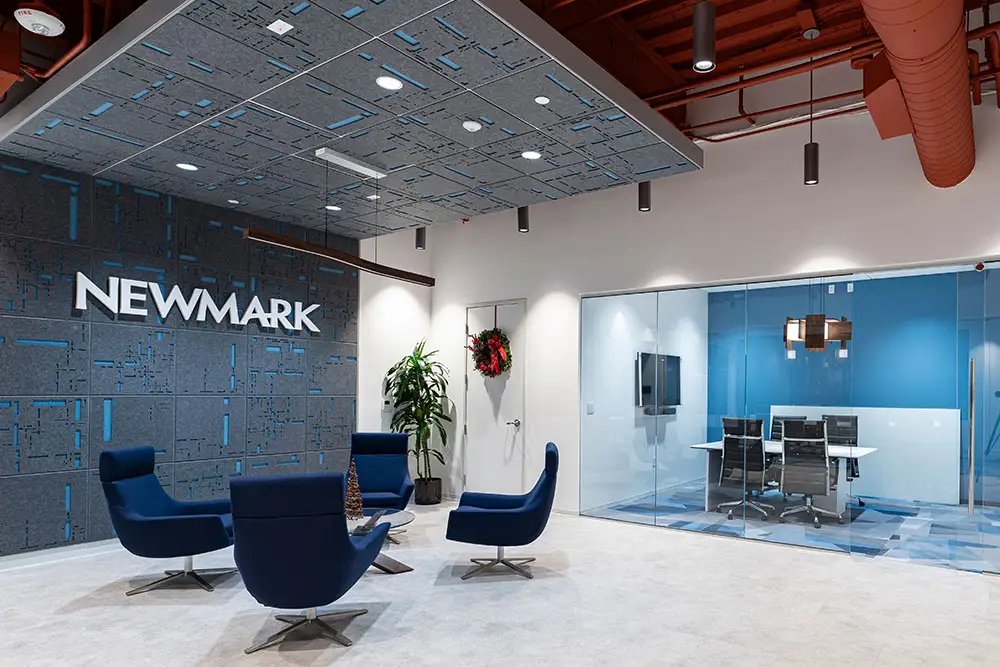
To see how this phase comes to life, explore our Playstudios project or the Newmark office renovation.

Why it matters: Schematic Design provides clarity early, allowing informed decisions before moving into detailed documentation.


3) Design Development & Construction Documentation Services

Once the overall direction is approved, we move into Design Development. This phase transforms concepts into coordinated, build-ready solutions. Plans and elevations become fully dimensioned, materials and finishes are finalized, and lighting selections are carefully coordinated.

We also collaborate with engineering and specialty consultants to ensure all building systems integrate seamlessly. This coordination aligns with industry best practices outlined by the American Institute of Architects.

Why it matters: Design Development replaces uncertainty with precision, reducing risk and minimizing surprises during construction.


4) Construction Documents for Accurate Pricing & Execution

During this phase, the design is translated into a comprehensive set of construction documents. These drawings and specifications provide the technical detail required for accurate contractor pricing and successful execution in the field.

Clear documentation protects your investment and supports efficient project delivery.

Why it matters: Well-developed construction documents help keep your tenant improvement project on schedule and on budget.


5) Building Permit Coordination in Las Vegas

We manage the permitting process on your behalf, including document submission, plan review tracking, and agency coordination. For eligible projects, BSP is authorized to self-certify plans, significantly expediting approval timelines.

For additional context on local permitting requirements, see the Clark County Building Permit process.

Why it matters: Permitting can be complex and time-consuming. We handle the details so your project keeps moving forward.


6) Construction Administration & Design-Build Oversight

Our involvement continues throughout construction. During Construction Administration, we remain engaged to ensure the design intent is carried through to the finished space.

We review shop drawings, respond to RFIs, process change orders, and address field questions, acting as your advocate from start to finish.

Why it matters: Active oversight helps maintain quality, manage changes effectively, and protect your original vision.


A Commercial Design Process
Built Around Your Business


At Burke Special Projects, our commercial design and tenant improvement process is structured yet flexible. It is built to support smart decision-making, reduce risk, and deliver high-performing spaces that work as hard as you do.

From the first conversation to final walkthrough, we are committed to a clear, collaborative, and results-driven experience.

If you are ready to begin your next office renovation or tenant improvement project, contact Burke Special Projects to start the conversation.

Go to Top